Category: AC Cleaning

AC Duct Cleaning, AC Vents Cleaning, AC Coil Cleaning, AC Filter Cleaning, AC Full System Cleaning

  • Indoor Air Quality 101: Why ac duct cleaning in dubai Protects Your Family from Hidden Allergens

    Indoor air quality often receives less attention than outdoor pollution, yet most people in Dubai spend the majority of their time inside climate-controlled spaces. When the air circulating through your home or office carries hidden allergens, the effects can range from mild irritation to more serious respiratory issues. One of the most effective ways to improve that air is professional ac duct cleaning in dubai.

    The desert climate, frequent dust events, and year-round reliance on air conditioning create unique challenges for indoor environments. Dust, pollen, mold spores, and other particles accumulate inside duct systems and then get redistributed with every cycle of the AC. Understanding how this process works and why regular cleaning matters helps families protect their health and comfort.

    This guide explains the sources of indoor allergens in UAE properties, how dirty ducts contribute to the problem, the specific benefits of cleaning, and practical steps homeowners can take to maintain better air quality between professional services.

    How Indoor Air Becomes Contaminated in Dubai Homes

    Outdoor air in the UAE already carries fine sand and particulate matter. When that air enters a building through open doors, windows, or the fresh-air intake of an HVAC system, many of those particles settle inside the duct network. Once inside, they mix with indoor sources: skin cells, pet dander, cooking residues, cleaning product residues, and fibers from carpets and upholstery.

    The continuous operation of air conditioning keeps these particles moving. In a sealed modern villa, the same air recirculates repeatedly. Without intervention, concentrations of allergens can rise well above outdoor levels. Children playing on the floor, elderly family members, and anyone with existing sensitivities feel the impact most strongly.

    Humidity adds another layer. Coastal areas of Dubai experience higher moisture levels that encourage mold growth on damp surfaces inside ducts. Even inland properties can develop moisture problems if condensate drains are slow or insulation becomes wet. The result is a mixture of inorganic dust and biological allergens that standard filters alone cannot fully control.

    Common Hidden Allergens Found in AC Ducts

    Several categories of contaminants commonly accumulate in Dubai duct systems.

    Dust mites thrive in the soft debris that collects on duct surfaces and in carpet fibers. Their waste particles are potent allergens for many people.

    Mold spores grow when moisture is present. Even small amounts of condensation can support colonies that release spores into the airstream.

    Pollen from local and regional vegetation enters during certain seasons and settles in the ducts, only to be blown out later.

    Pet dander from cats and dogs remains airborne for long periods and sticks to duct walls.

    Construction and renovation dust introduces silica, gypsum, and other fine particles that are particularly irritating to lungs.

    Each of these allergens can trigger sneezing, congestion, itchy eyes, skin rashes, or more severe asthma symptoms. Because the AC system distributes them evenly, symptoms may appear throughout the home rather than in one isolated room.

    Why Standard Filters Are Not Enough

    Most residential and light commercial systems use filters designed to protect the equipment rather than to purify the air completely. Basic fiberglass or low-MERV filters capture larger particles but allow finer allergens to pass. Even higher-efficiency filters eventually load up and lose effectiveness if not changed regularly.

    Filters sit at the beginning of the air path. Once dust and biological material bypass the filter or accumulate downstream on the evaporator coil and inside the ducts, the filter cannot remove what is already circulating. Over time the ducts themselves become a reservoir that continuously reintroduces contaminants.

    Professional ac duct cleaning in dubai addresses this reservoir directly. By removing the buildup from the entire network, it reduces the load on filters and improves the overall quality of air delivered to every room.

    Health Impacts of Poor Indoor Air Quality

    Short-term effects include frequent sneezing, runny nose, itchy or watery eyes, and mild headaches. Many people dismiss these as seasonal allergies without realizing the indoor environment is amplifying the problem.

    Longer exposure can worsen asthma control, increase the frequency of respiratory infections, and contribute to fatigue or difficulty concentrating. Children whose lungs are still developing and older adults with reduced respiratory reserve are especially sensitive. In households where someone already manages allergies or asthma, dirty ducts can make daily life more difficult.

    Studies of indoor environments consistently show that reducing particle and allergen levels improves comfort and can decrease the need for medication in sensitive individuals. While cleaning ducts is not a medical treatment, it removes a significant source of ongoing exposure.

    How Professional AC Duct Cleaning Improves Air Quality

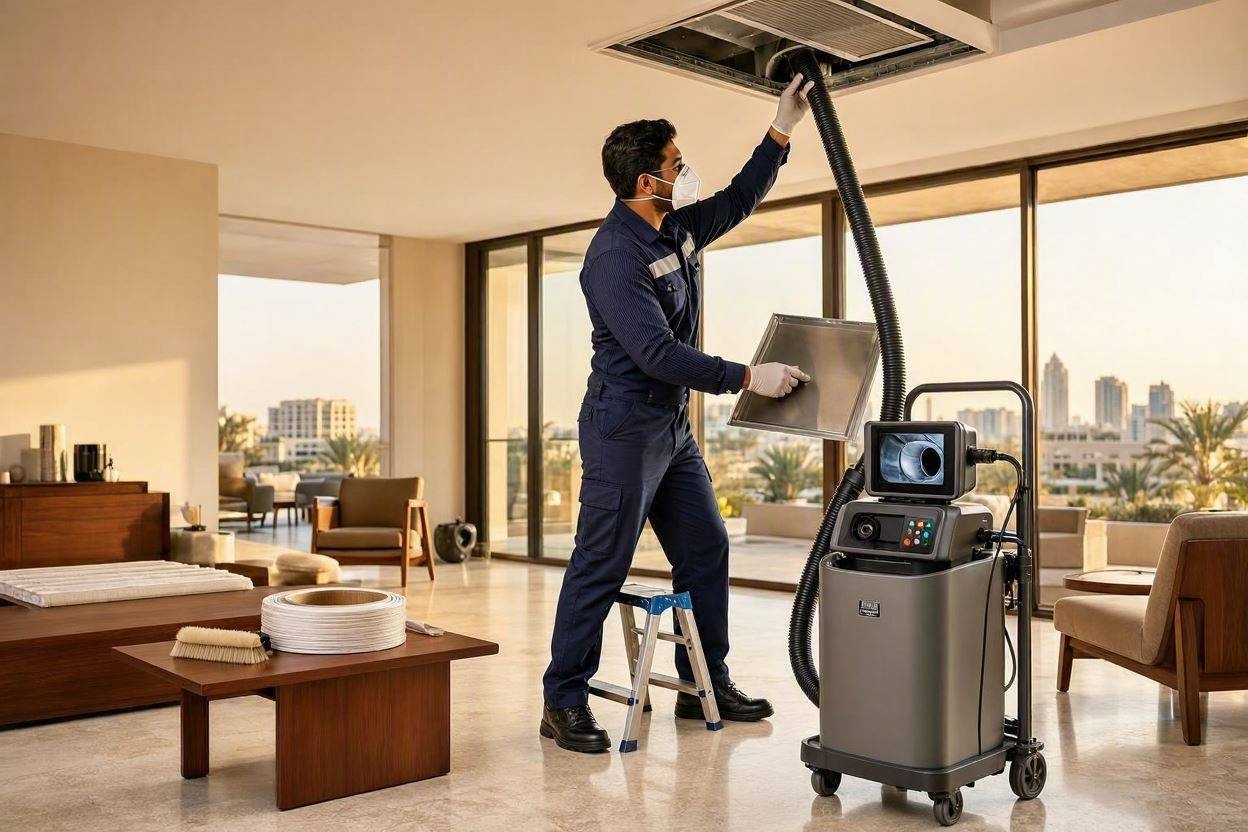
    The process begins with inspection. Technicians often use cameras or visual checks to assess the level of contamination. They then isolate the duct system, create controlled airflow, and use mechanical agitation combined with powerful vacuum extraction to loosen and remove debris.

    Specialized brushes reach deep into the network. High-efficiency particulate air (HEPA) filtration on the vacuum equipment ensures that extracted material does not escape back into the living space. In cases of visible mold, additional antimicrobial treatments may be applied after mechanical cleaning, always following safety guidelines.

    After the ducts are cleaned, many providers service the evaporator coil and replace filters. The combined effect is a measurable reduction in the particles and biological material circulating through the home. Clients frequently notice that the air smells fresher and that surfaces stay cleaner for longer.

    Timing Cleaning for Maximum Benefit in the UAE Climate

    The months leading up to summer are ideal. As temperatures rise, AC systems run almost continuously. Cleaning before this period of heavy use prevents the system from distributing a full season’s worth of accumulated allergens. Post-summer cleaning is also valuable because the long operating season deposits more material.

    Properties near active construction sites or major roads may need more frequent attention. Homes with pets or multiple occupants typically accumulate contaminants faster than lightly used spaces. Observing symptoms and visible dust provides the best guide for timing rather than rigid calendar intervals alone.

    Additional Steps That Support Cleaner Indoor Air

    Professional duct cleaning delivers the deepest improvement, yet daily habits reinforce the results.

    Change or clean filters on schedule. In Dubai’s dusty conditions, monthly checks are wise during peak seasons.

    Use doormats and consider a no-shoes policy to reduce the amount of outdoor sand tracked inside.

    Vacuum carpets and upholstery regularly with a vacuum that has good filtration.

    Control indoor humidity where possible. Properly functioning condensate drains and occasional dehumidifier use in damp areas help limit mold growth.

    Keep windows closed during dust storms and high-pollution periods. When ventilation is needed, choose times when outdoor air quality is better.

    These practices slow the rate at which new contaminants enter the duct system and extend the benefits of professional cleaning.

    Special Considerations for Villas and Larger Homes

    Many Dubai villas have extensive duct networks that serve multiple floors and zones. Longer runs mean more surface area for particles to settle. Upper floors sometimes show stronger symptoms because warmer air rises and carries particles with it.

    Zoned systems can create uneven distribution if one section of ductwork is more contaminated than another. A thorough cleaning addresses the entire network rather than only the most accessible sections. Homeowners should ensure the chosen provider has experience with the layouts common in local residential properties.

    What Businesses and Shared Spaces Should Know

    Offices, clinics, and retail spaces face similar issues with higher occupant density. More people generate more skin cells and introduce more outdoor particles each day. Poor indoor air quality can affect productivity and increase absenteeism.

    Facility managers who schedule regular ac duct cleaning in dubai often report fewer complaints about stuffiness or allergy symptoms among staff. Cleaning during evenings or weekends minimizes disruption while protecting the health of everyone who works in the building.

    Choosing a Reliable Provider

    Select a company that uses modern equipment, follows established cleaning methods, and employs trained technicians. Ask whether they perform a thorough inspection before quoting and whether they can provide documentation of the work completed. Experience with both residential villas and commercial properties in the UAE is an advantage.

    Transparent communication about what the service includes—and what it does not—helps set realistic expectations. A reputable provider focuses on mechanical removal of contaminants rather than promising miracle results from chemical treatments alone.

    Measuring Improvement After Cleaning

    Many families notice qualitative changes within days: less dust on surfaces, fresher-smelling air, and reduced allergy symptoms. Some providers offer before-and-after particle counts or visual comparisons using inspection cameras. While not every company supplies numerical data, the practical difference in daily comfort is usually clear.

    Tracking how often you need to dust furniture or how frequently family members reach for allergy medication can provide a personal measure of success.

    Long-Term Benefits Beyond Immediate Comfort

    Cleaner ducts support better system performance. When airflow is unrestricted, the AC reaches set temperatures more efficiently and cycles less frequently. This reduces energy consumption and mechanical wear. Over years, the cumulative savings and extended equipment life add value beyond the air-quality improvement.

    For families planning to stay in their Dubai home for the long term, regular duct maintenance becomes part of responsible property care, much like servicing the main AC units or maintaining the swimming pool.

    Conclusion: Protecting Your Family Starts with Cleaner Air

    Indoor air quality is not an abstract concept. It affects how well everyone in the household sleeps, concentrates, and feels each day. In Dubai’s climate, ac duct cleaning in dubai is one of the most direct ways to reduce the hidden allergens that accumulate inside the cooling system and then circulate through living spaces.

    By understanding the sources of contamination, recognizing the limits of ordinary filters, and scheduling professional cleaning at appropriate intervals, you take meaningful control over the air your family breathes. Combine that service with simple daily habits and you create a healthier indoor environment year-round.

    The investment pays returns in comfort, reduced allergy burden, and more efficient cooling. When the next dust storm arrives or summer heat demands continuous AC operation, you will appreciate knowing the ducts are clean and ready to deliver better air. Schedule an inspection with a trusted local provider and give your household the cleaner indoor environment it deserves.


    Frequently Asked Questions (FAQs)

    1. Does AC duct cleaning really help with allergies?

    Yes. Dirty ducts collect dust, pollen, mold spores, pet dander, and dust mites. These allergens get recirculated every time the AC runs. Professional cleaning removes this buildup, which often reduces allergy symptoms such as sneezing, itchy eyes, congestion, and respiratory irritation for many families in Dubai.

    2. What hidden allergens are commonly found inside AC ducts?

    The most common ones include:

    • Fine desert dust and construction particles
    • Mold spores (especially in humid conditions)
    • Dust mites and their waste
    • Pet dander
    • Pollen that enters from outdoors
    • Skin cells and fabric fibers

    These particles settle deep inside the duct network and are continuously blown into living spaces.

    3. Can poor indoor air quality from dirty ducts affect my family’s health?

    Yes. In sealed, air-conditioned homes common in Dubai, the same air recirculates for long hours. This can lead to more frequent sneezing, coughing, headaches, sore throats, worsened asthma, and general fatigue. Children, elderly family members, and people with existing allergies or respiratory conditions are usually the most affected.

    4. Why is indoor air quality often worse than outdoor air in Dubai homes?

    Because windows stay closed for cooling, outdoor dust and pollutants that enter the system have nowhere to escape. Combined with indoor sources (pets, cooking, skin cells, and furniture fibers), contaminants build up inside the ducts and get redistributed throughout the home. This creates a closed loop of recirculated allergens.

    5. How often should I clean AC ducts to protect indoor air quality in Dubai?

    Most homes benefit from professional cleaning every 1–3 years. Properties with pets, high occupancy, nearby construction, or family members who suffer from allergies may need service more frequently. Watching for symptoms (increased allergies, musty smells, or visible dust) is a better guide than a fixed schedule alone.

    6. Will changing the AC filter alone solve indoor air quality problems?

    No. Filters catch only part of the particles and sit at the beginning of the air path. Dust, mold, and allergens that have already settled inside the ducts continue to circulate. Filter changes are important, but they cannot remove the reservoir of contaminants already trapped deeper in the system.

    7. Can mold grow inside AC ducts in Dubai’s climate?

    Yes. Humidity and condensation create ideal conditions for mold growth on damp duct surfaces and insulation. Once established, mold releases spores into the airstream. Professional cleaning removes both the mold and the organic material that feeds it, helping prevent ongoing exposure.

    8. What are the signs that dirty ducts are harming my indoor air quality?

    Common signs include:

    • Increased allergy or asthma symptoms indoors
    • Musty or stale smells when the AC starts
    • Frequent headaches, sore throats, or morning congestion
    • Visible dust settling quickly on furniture
    • Family members feeling better when away from home

    These often point to contaminants circulating through the duct system.

    9. Is professional AC duct cleaning enough on its own to improve air quality?

    It is one of the most effective steps, but results last longer when combined with good habits: regular filter changes, reducing tracked-in dust, controlling indoor humidity, and vacuuming soft furnishings. Together, these measures significantly lower the allergen load your family breathes every day.
  • Health Benefits of Hiring a Certified AC Duct cleaning company in Dubai Before Summer Sets In

    Health Benefits of Hiring a Certified AC Duct cleaning company in Dubai Before Summer Sets In

    As temperatures climb toward the peak summer months in Dubai, air conditioning systems shift into near-continuous operation. The air they deliver becomes the primary air most families and employees breathe for many hours each day. When that air carries accumulated dust, allergens, and microbial contaminants from dirty ducts, the health consequences can be significant. Hiring a certified ac duct cleaning company in Dubai before the intense heat arrives offers clear protective benefits.

    This article explores the specific health advantages of professional cleaning, why timing the service before summer matters, what certification and proper methods contribute, and how cleaner ducts support overall well-being for households and workplaces across the UAE.

    The Link Between Dirty Ducts and Respiratory Health

    Airborne particles and biological agents trapped in ductwork are inhaled repeatedly. Common contaminants include fine dust, mold spores, bacteria, pollen, and pet dander. In a sealed, air-conditioned environment, concentrations can build higher than outdoor levels.

    People with asthma often experience more frequent or severe symptoms when indoor air quality declines. Allergic rhinitis, sinus irritation, and general respiratory discomfort become more common. Even individuals without diagnosed conditions may notice increased sneezing, coughing, or throat irritation during periods of heavy AC use.

    Children, whose respiratory systems are still developing, and older adults, who may have reduced lung capacity or existing conditions, face elevated risk. By removing the reservoir of contaminants inside the ducts, professional cleaning reduces the daily exposure load for everyone in the building.

    Mold and Moisture Concerns in the UAE Climate

    Humidity and condensation create favorable conditions for mold growth inside duct systems. Even small amounts of moisture on insulation or metal surfaces can support colonies that release spores into the airstream. Some molds produce mycotoxins or trigger strong allergic responses.

    In Dubai, coastal properties and buildings with occasional drainage issues are particularly susceptible. Once established, mold is difficult to control without thorough mechanical cleaning. Surface wiping of vents addresses only the visible portion; the bulk of the problem often lies deeper in the network.

    A certified company uses methods that agitate and extract mold and the organic material that feeds it. In appropriate cases, they may apply treatments after cleaning, always following safety protocols that protect occupants. Reducing mold exposure before the long summer operating season limits the period during which spores circulate continuously.

    Reduction in Allergy Triggers

    Many Dubai residents manage seasonal or year-round allergies. Dust mites, pollen that enters from outdoors, and other common allergens settle inside ducts and are then redistributed. Continuous recirculation means sensitive individuals receive a steady dose rather than intermittent outdoor exposure.

    After professional cleaning, clients frequently report fewer allergy symptoms, reduced reliance on antihistamines, and better sleep quality. While results vary by individual and by the severity of previous contamination, the reduction in airborne triggers is a consistent outcome of thorough duct cleaning.

    Improved Sleep and Daytime Comfort

    Air quality affects more than the respiratory system. Poor indoor air can contribute to headaches, fatigue, and difficulty concentrating. When the air feels heavy or carries a musty odor, sleep quality often suffers. Children may wake more frequently; adults may feel less rested.

    Cleaner air supports deeper, more restorative sleep and sharper daytime function. In offices, the same improvement can translate into better focus and lower rates of minor illness among staff. These quality-of-life benefits complement the more direct respiratory advantages.

    Protection for Vulnerable Family Members

    Households that include infants, young children, pregnant women, or elderly relatives have particular reason to prioritize clean ducts. These groups often spend more time indoors and may have heightened sensitivity to airborne irritants. Reducing the contaminant load provides an extra layer of protection during the months when outdoor heat makes extended time outdoors impractical.

    Similarly, anyone recovering from respiratory illness or managing chronic conditions benefits from minimizing additional indoor stressors. Scheduling cleaning before summer ensures the system is ready for the period of heaviest use.

    Why Certification and Proper Methods Matter

    Not every cleaning service delivers the same health benefit. Certification indicates that technicians have received training in industry-accepted procedures and safety standards. Proper methods include thorough mechanical agitation, high-efficiency vacuum extraction, and containment practices that prevent cross-contamination of living spaces.

    Companies that rely primarily on chemical fogging without mechanical removal may leave much of the debris in place. A certified ac duct cleaning company in dubai focuses on physical removal of the contaminants that drive health concerns. Asking about equipment, process, and training helps identify providers who prioritize real improvement over superficial treatment.

    Timing the Service for Maximum Health Protection

    Cleaning in the weeks or months before peak summer has strategic advantages. The system enters the high-demand period free of the previous season’s accumulation. As outdoor dust levels rise and AC run times increase, the clean ducts recirculate less contaminated air.

    Waiting until mid-summer means the system has already been distributing allergens for weeks or months. Performing the service earlier shortens that exposure window and allows the household to enjoy cleaner air throughout the hottest period.

    Post-summer cleaning is also valuable for removing the heavy deposit left by continuous operation, but the pre-summer timing delivers the greatest protective benefit during the season of highest indoor occupancy and AC reliance.

    Complementary Habits That Support Respiratory Health

    Professional cleaning provides the foundation. Supporting habits multiply the gains.

    Maintain filters diligently. Clean filters capture particles before they reach the ducts and reduce the rate of recontamination.

    Control indoor humidity. Proper condensate management and occasional use of dehumidifiers in damp areas limit mold growth.

    Minimize tracked-in dust with doormats and shoe removal.

    Vacuum soft surfaces regularly with equipment that has good filtration.

    These practices keep the benefits of duct cleaning intact for longer and further reduce the overall allergen load indoors.

    What to Expect from a Professional Health-Focused Cleaning

    A thorough service typically includes inspection, often with visual or camera documentation of conditions before work begins. Technicians isolate the system, use appropriate agitation tools, and extract debris with powerful, filtered vacuums. Attention is given to the full network rather than only accessible sections.

    After mechanical cleaning, the provider may recommend or perform coil cleaning and filter replacement. Some offer indoor air quality testing or particle counts, though the practical improvement in comfort and symptoms remains the primary measure for most families.

    Clear communication about the process and realistic expectations distinguishes reputable companies. Health benefits accumulate from the removal of contaminants, not from exaggerated claims.

    Long-Term Health and System Benefits

    Beyond the immediate reduction in airborne irritants, clean ducts support more efficient system operation. Better airflow means more consistent temperatures and less strain on the equipment. A system that runs properly is less likely to develop secondary problems such as ice formation or excessive condensation that could encourage further microbial growth.

    Over years, regular professional cleaning contributes to a healthier indoor environment and more reliable cooling performance. For families committed to long-term residence in Dubai, it becomes part of a comprehensive approach to home health and comfort.

    Addressing Concerns About Disruption and Cost

    Some homeowners hesitate because they worry about inconvenience or expense. Most residential cleanings can be completed in a single day with minimal disruption. Technicians work systematically through the property and restore normal operation promptly.

    When viewed against the potential costs of increased medication, lost productivity, or more frequent medical visits related to poor air quality, the service represents a preventive investment. Many clients find the improvement in daily comfort and the reduction in allergy-related expenses justify the outlay.

    Conclusion: Cleaner Air for a Healthier Summer

    Hiring a certified ac duct cleaning company in dubai before summer sets in is a practical step toward protecting respiratory health and overall well-being. By removing the dust, allergens, and microbial contaminants that accumulate inside the duct system, professional cleaning reduces the daily exposure that can trigger or worsen symptoms for sensitive individuals and improve comfort for everyone.

    The timing matters. Completing the work before the long months of continuous AC operation maximizes the period of cleaner air when it is needed most. Combined with good filter habits and basic indoor environmental controls, the service delivers lasting benefits for households and workplaces across the UAE.

    Take the proactive step now. Contact a reputable certified provider, schedule the inspection and cleaning, and enter the summer season with confidence that the air circulating through your home or office supports rather than challenges the health of those who live or work there. Cleaner ducts mean cleaner air—and that is one of the most valuable preparations any Dubai resident can make.


    Frequently Asked Questions (FAQs)

    1. What are the main health benefits of AC duct cleaning before summer?

    Cleaning before the peak summer months removes accumulated dust, mold spores, pollen, pet dander, and other allergens from the duct system. This reduces the amount of irritants circulating when the AC runs almost continuously, often leading to fewer allergy symptoms, less respiratory irritation, better sleep, and improved overall comfort for the family.

    2. Can dirty AC ducts make allergies or asthma worse?

    Yes. Contaminants trapped in the ducts are blown into living spaces every time the system operates. This continuous exposure can trigger or intensify sneezing, coughing, congestion, itchy eyes, and asthma symptoms. Professional cleaning removes a major indoor source of these triggers.

    3. Why is it better to hire a certified AC duct cleaning company?

    Certified companies follow proper cleaning methods, use the right equipment, and train their technicians to remove contaminants thoroughly and safely. This reduces the risk of incomplete cleaning, cross-contamination, or damage to the system. Certification also signals that the provider prioritizes real results over quick chemical treatments.

    4. Does AC duct cleaning help with mold-related health issues?

    Yes, when mold is present. Moisture and condensation inside ducts can support mold growth, which releases spores into the air. A certified company uses mechanical cleaning to remove both the mold and the organic material that feeds it, helping lower ongoing exposure that can affect respiratory health.

    5. Why should I clean the ducts before summer instead of during or after?

    Summer is when AC systems run the longest in Dubai. Cleaning beforehand ensures the system starts the high-demand season free of the previous buildup. This shortens the period of continuous allergen circulation and gives the household cleaner air during the months when people spend the most time indoors.

    6. Who benefits most from professional duct cleaning for health reasons?

    Families with young children, elderly members, pregnant women, or anyone with existing allergies, asthma, or respiratory sensitivities usually notice the greatest improvement. These groups often spend more time indoors and are more vulnerable to airborne irritants.

    7. Will I notice health improvements right after cleaning?

    Many people report fresher-smelling air, reduced morning congestion, fewer allergy symptoms, and better sleep within days. Results vary depending on the level of previous contamination and individual sensitivity, but most households experience a clear improvement in daily comfort.

    8. Is duct cleaning enough on its own to improve indoor health?

    It is one of the most effective single steps, but the benefits last longer when combined with regular filter changes, controlling indoor humidity, reducing tracked-in dust, and good general housekeeping. Together these practices keep allergen levels lower throughout the season.

    9. Are the health claims about AC duct cleaning supported?

    While large-scale medical studies are limited, removing visible dust, mold, and allergen reservoirs from the duct system is widely regarded as a practical way to reduce indoor exposure. Many allergy and respiratory sufferers report noticeable relief after professional cleaning, especially when it is done thoroughly by a certified provider before the heavy cooling season begins.

  • Lowering Your DEWA Bills: How Routine ac filter cleaning dubai Improves System Efficiency

    Lowering Your DEWA Bills: How Routine ac filter cleaning dubai Improves System Efficiency

    Electricity costs form a significant part of household and business expenses in the UAE. For most properties, air conditioning accounts for the largest share of the DEWA bill, especially during the long, hot months. One of the simplest and most cost-effective ways to keep those costs under control is routine ac filter cleaning dubai.

    Dirty filters force the entire cooling system to work harder. Airflow drops, the compressor runs longer, and energy consumption climbs. Cleaning or replacing filters on a regular schedule restores proper airflow, improves efficiency, and can produce noticeable savings on monthly statements. This article explains exactly how the process works, how often it should be done in Dubai conditions, and what additional steps amplify the benefits.

    Why Filters Become Dirty So Quickly in the UAE

    Dubai’s environment loads filters faster than many other climates. Fine desert dust, construction particles, and high levels of outdoor particulate matter enter the system continuously. Inside the home, everyday activities add skin cells, pet hair, cooking aerosols, and fabric fibers.

    A filter that looks only lightly soiled can already restrict airflow enough to affect performance. In peak summer, when the AC may run 18-20 hours a day, the accumulation accelerates. Properties near busy roads, construction sites, or open desert areas see even faster loading.

    Ignoring the filter does not simply reduce cooling comfort. It increases the pressure drop across the filter media, forcing the blower motor to draw more power and the compressor to cycle more frequently to maintain the set temperature. Over weeks and months, these small inefficiencies add up to higher DEWA bills.

    How a Dirty Filter Raises Energy Use

    The relationship is straightforward. Restricted airflow means less cool air reaches the living spaces. The thermostat senses that the temperature has not dropped as expected and keeps the system running. Longer run times equal higher electricity consumption.

    In addition, the evaporator coil can become colder than designed when airflow is low. This increases the risk of ice formation, which further blocks airflow and can lead to system shutdowns or damage. Even before ice appears, the reduced heat transfer efficiency means the compressor works against a less effective cooling process.

    Studies and field experience consistently show that clean filters can improve system efficiency by 5-15 percent depending on the severity of the previous restriction. For a typical Dubai villa, that percentage translates into real dirhams saved each month.

    Recommended Cleaning and Replacement Schedule for Dubai

    There is no single schedule that fits every property, but practical guidelines exist.

    Check filters monthly during the hottest months (May through September). In milder periods, every six to eight weeks is often sufficient.

    Clean washable filters according to the manufacturer’s instructions—usually with mild soap and water, followed by thorough drying before reinstallation.

    Replace disposable filters when they show visible dirt or when airflow feels reduced. Many households in Dubai find that high-quality filters need replacement every one to three months under heavy use.

    Homes with pets, smokers, or high occupancy generally require more frequent attention. Commercial spaces with continuous operation and higher foot traffic follow similar or shorter intervals.

    Keeping a simple log of filter checks and changes helps maintain consistency and provides a record if efficiency questions arise later.

    Step-by-Step Guide to Cleaning Washable Filters

    Turn off the AC system at the thermostat and, for safety, at the isolator switch if accessible.

    Locate the filter. In most Dubai systems it sits in the return air grille or inside the air handler unit.

    Remove the filter carefully, noting the direction of airflow arrows so it can be reinstalled correctly.

    Vacuum loose dust from both sides using a brush attachment.

    Wash with lukewarm water and a small amount of mild detergent if the manufacturer permits. Avoid high-pressure water that could damage the media.

    Rinse thoroughly and allow the filter to dry completely—preferably in the shade to prevent warping.

    Reinstall in the correct orientation and restore power.

    If the filter is damaged, torn, or no longer fits properly, replace it rather than attempting to clean it further.

    Choosing the Right Filter for Efficiency and Air Quality

    Not all filters perform the same. Basic fiberglass filters protect the equipment but capture little fine dust. Higher MERV-rated filters trap smaller particles and can improve indoor air quality, yet they also create more resistance.

    The key is balance. Select a filter that the system can handle without excessive pressure drop. Many modern Dubai installations perform well with MERV 8 to MERV 11 filters. Higher ratings may require system modifications or more powerful blowers.

    Ask a qualified technician for guidance specific to your equipment. Using a filter that is too restrictive can negate efficiency gains and even damage the motor over time.

    Additional Maintenance That Multiplies Filter Benefits

    Filter care works best as part of a broader routine.

    Keep the area around outdoor condenser units free of leaves, sand, and debris so the unit can reject heat efficiently.

    Ensure indoor vents and returns remain unobstructed by furniture or curtains.

    Schedule professional coil cleaning periodically. A dirty evaporator or condenser coil reduces heat transfer just as a dirty filter reduces airflow.

    Have the refrigerant charge checked if cooling performance declines despite clean filters. Incorrect charge is another common cause of high energy use.

    These complementary steps ensure that the efficiency gained from clean filters is not lost elsewhere in the system.

    Real-World Impact on DEWA Bills

    Homeowners who adopt consistent filter maintenance often report measurable reductions in monthly electricity costs. The exact amount varies with system size, building insulation, thermostat settings, and local electricity rates, but savings of several hundred dirhams over a summer season are common for larger villas.

    Commercial properties with multiple units see scaled benefits. Facility managers who implement scheduled filter programs frequently document lower energy intensity and fewer emergency service calls related to airflow problems.

    Tracking consumption through the DEWA app or monthly statements before and after improving filter discipline provides concrete feedback. Many users notice that the system reaches the desired temperature faster and cycles off more promptly once filters are clean.

    Common Mistakes That Undermine Efficiency

    Leaving a dirty filter in place for months is the most frequent error. Another is installing the filter backward so that the airflow arrow points the wrong direction; this reduces effectiveness and can damage the media.

    Some people run the system with the filter removed entirely, thinking it improves airflow. This allows dust to coat the coil and blower, creating a more serious and expensive problem.

    Using household vacuum cleaners on filters without proper technique can push dirt deeper into the media. Following manufacturer guidance or professional advice avoids these pitfalls.

    When Professional Help Is Needed Beyond Filter Cleaning

    Filter maintenance is largely a homeowner task, yet certain situations call for technicians. If the filter housing is difficult to access, if the system has specialized filtration, or if you notice persistent performance issues despite clean filters, professional diagnosis is wise.

    Technicians can also verify that the filter size and type match the system design and that there are no leaks in the return ductwork that allow unfiltered air to bypass the filter entirely.

    Integrating Filter Care into a Broader Efficiency Strategy

    Clean filters form the foundation. Layering additional measures produces larger savings.

    Set thermostats to the highest comfortable temperature. Each degree higher can reduce energy use noticeably.

    Use ceiling fans to improve perceived comfort and allow slightly higher thermostat settings.

    Close curtains or blinds during peak sun hours to reduce heat gain.

    Ensure the building envelope is well sealed so conditioned air stays inside.

    Consider programmable or smart thermostats that adjust settings automatically when spaces are unoccupied.

    When these practices combine with routine ac filter cleaning dubai, the cumulative effect on DEWA bills becomes substantial.

    Seasonal Checklist for Dubai Homeowners

    Before summer:

    • Inspect and clean or replace all filters
    • Clear outdoor units of debris
    • Test system operation and note any unusual noises or performance issues

    During summer:

    • Check filters monthly
    • Monitor DEWA consumption for unexpected spikes
    • Keep indoor spaces free of unnecessary heat sources

    After summer:

    • Perform a thorough filter cleaning or replacement
    • Schedule professional maintenance if the system worked hard all season

    Following this rhythm keeps efficiency high year-round.

    Conclusion: Small Habit, Meaningful Savings

    Routine ac filter cleaning dubai is one of the lowest-effort, highest-return maintenance tasks available to homeowners and facility managers. By preventing airflow restriction, it allows the cooling system to operate closer to its designed efficiency and reduces the electricity required to keep indoor spaces comfortable.

    In a climate where air conditioning is essential for large parts of the year, the financial impact compounds quickly. Cleaner filters also support better indoor air quality and extend the life of expensive system components.

    Start today by checking the filters in your home or workplace. Establish a simple schedule, choose appropriate media, and combine the habit with the complementary steps outlined here. The result is lower DEWA bills, more reliable cooling, and greater peace of mind through the hottest months. Consistent attention to this small detail delivers outsized returns for any property that relies on air conditioning in the UAE.

    Frequently Asked Questions (FAQs)

    1. Can a dirty AC filter really increase my DEWA bill?

    Yes. A clogged filter restricts airflow, forcing the AC system to run longer and work harder to cool your home. This extra effort uses more electricity. Studies and energy experts commonly estimate that a dirty filter can raise HVAC energy use by 5% to 15%, which shows up clearly on your DEWA statement during the hot months.

    2. How often should I clean or replace my AC filter in Dubai?

    In Dubai’s dusty climate, check filters every month during peak summer (May–September). Clean or replace them every 1–3 months depending on the filter type, number of occupants, pets, and nearby construction. Homes with heavy dust exposure often need attention every 30–60 days for best efficiency.

    3. How much money can I save by keeping AC filters clean?

    Savings vary by system size and usage, but many households notice a meaningful drop in cooling costs once airflow is restored. Consistent filter maintenance is one of the simplest ways to prevent the 5–15% efficiency loss caused by dirt buildup, which can add up to hundreds of dirhams over a full summer season.

    4. What is the difference between cleaning and replacing an AC filter?

    Washable filters can be cleaned with mild soap and water, then thoroughly dried before reinstalling. Disposable filters should be replaced when they look dirty or airflow feels reduced. Never run the system without a filter, as this allows dust to coat the coil and blower, creating bigger efficiency and repair problems.

    5. Does a higher MERV filter always save more energy?

    Not necessarily. Higher MERV filters capture smaller particles and improve air quality, but they also create more resistance to airflow. If the filter is too restrictive for your system, the AC may use more energy. Choose a filter that balances filtration and airflow—many Dubai homes perform well with MERV 8 to MERV 11.

    6. What are the signs that a dirty filter is raising my electricity bill?

    Common signs include:

    • The AC running longer than usual to reach the set temperature
    • Weaker airflow from vents
    • Higher DEWA bills without changes in usage or thermostat settings
    • The system cycling on and off more frequently
    • Visible dirt or dust buildup on the filter itself

    Checking the filter is one of the first and easiest troubleshooting steps.

    7. Can I clean the AC filter myself, or do I need a professional?

    Most standard filters are easy for homeowners to clean or replace. Turn off the system, remove the filter, vacuum or wash it (if washable), let it dry completely, and reinstall it in the correct direction. Professional help is useful if the filter is hard to access, the system has specialized filtration, or you notice ongoing performance issues even with clean filters.

    8. Will cleaning the filter alone fix high DEWA bills?

    It often makes a noticeable difference, especially if the filter was heavily clogged. However, other factors such as dirty coils, low refrigerant, poor insulation, or incorrect thermostat settings can also drive up costs. Filter care is the simplest starting point and should be part of a broader efficiency routine.

    9. How does a clean filter improve overall AC system efficiency?

    A clean filter allows proper airflow across the evaporator coil. This helps the system cool faster, reach the desired temperature more quickly, and cycle off sooner. Reduced run time means lower electricity use, less strain on the compressor and blower motor, and longer equipment life—all of which support lower long-term costs.

  • What Homeowners Must Know About Professional villa ac duct cleaning Guidelines

    What Homeowners Must Know About Professional villa ac duct cleaning Guidelines

    Owning a villa in Dubai or the wider UAE brings many advantages, including spacious living and private outdoor areas. It also brings responsibility for maintaining complex building systems, among them the extensive air-conditioning duct network. Professional villa ac duct cleaning follows specific guidelines that protect both the system and the indoor environment. Understanding those guidelines helps homeowners choose the right service and set realistic expectations.

    This article covers the key principles that govern effective villa duct cleaning, the steps a competent provider should follow, common pitfalls to avoid, and how to prepare for and evaluate the work. The goal is practical knowledge that allows villa owners to make informed decisions and obtain lasting results.

    Why Villa Duct Systems Require Specialized Attention

    Villas typically feature longer duct runs, multiple zones, and greater total surface area than apartments. Ducts may travel through ceilings, walls, and sometimes roof spaces. Access points can be limited. The systems often serve both living areas and secondary spaces such as maid’s rooms, garages, or outdoor shaded areas.

    These characteristics mean that cleaning methods suitable for a small apartment may leave large portions of a villa system untouched. Professional guidelines emphasize complete coverage, proper containment, and techniques adapted to the specific layout of residential villas common in the UAE.

    Desert dust, high occupancy in family homes, and continuous cooling demand accelerate contamination. Guidelines therefore stress thorough mechanical removal rather than partial or cosmetic treatments.

    Core Principles of Professional Villa AC Duct Cleaning

    Several principles underpin effective service.

    First, inspection precedes cleaning. Visual examination or camera inspection identifies the level and type of contamination and reveals any damage or design issues that could affect the process.

    Second, containment protects living spaces. Technicians seal vents and create negative pressure so that loosened debris is drawn into the vacuum system rather than released into rooms.

    Third, mechanical agitation is essential. Brushes, air whips, or other tools loosen adhered material from duct walls. Vacuum extraction alone cannot remove firmly attached deposits.

    Fourth, the entire accessible network should be addressed. Selective cleaning of only the most convenient sections leaves residual contamination that continues to affect air quality.

    Fifth, post-cleaning verification confirms results. Many providers offer before-and-after documentation or a final inspection to demonstrate improvement.

    These principles form the foundation of guidelines followed by reputable companies serving Dubai villas.

    The Typical Process Step by Step

    A professional service generally follows a structured sequence.

    The team arrives and reviews the scope with the homeowner. They identify all supply and return points and note any special conditions such as recent renovations or known moisture issues.

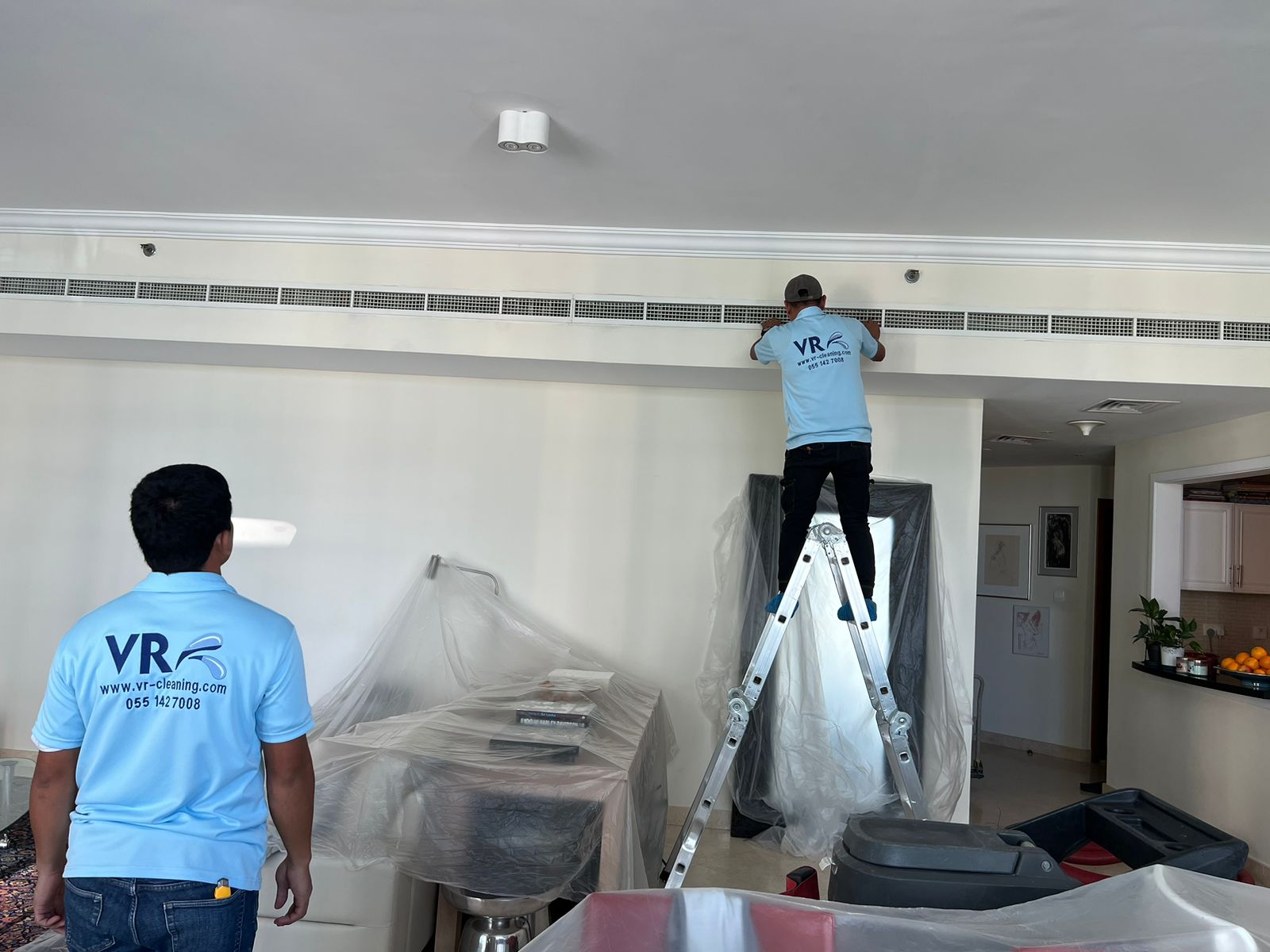
    They protect flooring and furniture as needed and seal the vents. Negative-pressure equipment is connected to the system.

    Agitation tools are introduced through access points or existing openings. Technicians work systematically through each branch of the network.

    Powerful vacuums with HEPA or equivalent filtration extract the loosened material. The process continues until the extracted air runs clean and visual checks confirm improvement.

    After the ducts, attention often turns to the evaporator coil and blower compartment if they are accessible and contaminated. Filters are replaced or cleaned.

    Finally, the system is restored, vents are reopened, and the team reviews the work with the homeowner. Any recommendations for repairs or future maintenance are discussed.

    The duration depends on villa size and system complexity. A typical multi-bedroom villa may require several hours to a full day.

    Access and Preparation Considerations

    Homeowners can facilitate efficient work by ensuring clear access to all vents, the air handler, and outdoor units if relevant. Moving furniture away from return grilles and supply vents reduces the time spent on protection and repositioning.

    Informing the technicians about any known issues—such as previous water leaks, unusual odors, or rooms that cool poorly—helps them focus attention where it is most needed.

    If the villa has multiple independent systems, clarify which units are included in the service. Some larger properties have separate systems for different wings or floors.

    Equipment Standards That Matter

    Guidelines emphasize the use of appropriate tools. Truck-mounted or high-powered portable vacuums capable of generating significant airflow and static pressure are preferred for thorough extraction. Soft or specialized brushes prevent damage to flexible ductwork or internal insulation.

    HEPA filtration on the vacuum system prevents the reintroduction of fine particles into the home. Companies that rely on low-powered household-style vacuums or compressed air alone without proper extraction fall short of professional standards.

    Asking about the equipment a provider uses gives insight into the thoroughness of the service they can deliver.

    Addressing Mold and Moisture Within Guidelines

    When visual inspection reveals mold, guidelines call for careful assessment. The primary approach remains mechanical removal of the mold and the organic material supporting it. Antimicrobial applications, if used, follow cleaning and are applied according to product instructions and safety requirements.

    Homeowners should be cautious of services that promise mold elimination through fogging or spraying without agitation and extraction. Residual debris left in place can allow regrowth. Proper guidelines prioritize physical removal.

    If moisture problems are identified—such as leaking condensate pans or inadequate insulation—the cleaning company should note them and recommend further investigation by a qualified HVAC technician.

    Frequency Guidelines for Dubai Villas

    No single interval fits every property. Factors include location (proximity to desert or construction), presence of pets, number of occupants, and whether windows are frequently opened.

    Many professionals suggest inspection every 12 to 24 months, with cleaning performed when contamination is evident. Villas that experience heavy dust infiltration or continuous high occupancy may benefit from annual service. Lightly used properties with good filtration can sometimes extend the interval.

    Observing signs such as visible dust from vents, musty odors, or increased allergy symptoms provides a more reliable trigger than the calendar alone.

    Evaluating Quotes and Choosing a Provider

    Quotes should reflect the size and complexity of the villa system rather than a generic flat rate. Extremely low prices often indicate incomplete service or the use of inadequate methods.

    Ask whether the quote includes the full network, coil cleaning if needed, and filter replacement. Clarify whether the company carries insurance and whether technicians are trained.

    Recent reviews from other villa owners in Dubai or the surrounding emirates offer useful perspective. Providers who willingly explain their process and answer detailed questions tend to follow more rigorous guidelines.

    After-Cleaning Care and Homeowner Responsibilities

    Once the ducts are clean, maintaining the improvement requires ongoing attention. Change or clean filters regularly. Keep the area around outdoor units clear. Address any moisture issues promptly.

    Avoid introducing large amounts of dust through renovations without subsequent cleaning. If construction occurs nearby, consider more frequent filter changes and an earlier inspection.

    These habits extend the benefits of professional cleaning and protect the investment.

    Common Misconceptions About Villa Duct Cleaning

    One misconception is that cleaning is unnecessary if filters are changed regularly. Filters protect the equipment but do not remove material already deposited downstream in the ducts.

    Another is that all cleaning methods are equivalent. Surface vacuuming of vents or chemical treatments without mechanical agitation leave the majority of contamination in place.

    A third is that the service is purely cosmetic. In reality, proper cleaning improves airflow, efficiency, and indoor air quality in measurable ways.

    Understanding these points helps homeowners avoid incomplete solutions.

    Documentation and Accountability

    Reputable providers often supply photographic or video documentation of conditions before and after cleaning. This record demonstrates the work performed and provides a baseline for future comparisons.

    Homeowners should request such documentation when available. It serves both as proof of service and as a useful reference if performance questions arise later.

    Conclusion: Informed Decisions Lead to Better Results

    Professional villa ac duct cleaning guidelines exist to ensure thorough, safe, and effective service. By understanding the principles of inspection, containment, mechanical agitation, complete coverage, and verification, homeowners can select providers who deliver real improvement rather than superficial treatment.

    Preparation, clear communication, and realistic expectations further enhance the outcome. When the work is completed according to sound guidelines, the villa benefits from cleaner air, more efficient cooling, and a healthier indoor environment for the family.

    Take the time to ask informed questions, review the proposed process, and choose a company experienced with the duct systems found in Dubai villas. The result is a service that meets the needs of your property and supports comfort and well-being through the demanding UAE climate.


    Frequently Asked Questions (FAQs)

    1. What should a proper professional villa AC duct cleaning include?

    A thorough service should start with a full inspection (often using cameras), seal the system to contain debris, use mechanical agitation (brushes or air tools) to loosen dirt, and extract it with powerful vacuums that have proper filtration. The entire accessible duct network, not just the visible vents, should be cleaned. Many providers also clean or inspect the evaporator coil and replace filters as part of the job.

    2. How long does professional duct cleaning usually take for a Dubai villa?

    Most villas take several hours to a full day, depending on the size of the property, number of floors, length of the duct runs, and level of contamination. Larger multi-zone or multi-story villas typically require more time than smaller ones. Reputable companies will give a realistic time estimate after assessing the system.

    3. What questions should I ask before hiring a duct cleaning company?

    Ask whether they perform a pre-cleaning inspection, what equipment they use (especially vacuum power and filtration), whether they clean the full duct network or only accessible sections, if they provide before-and-after documentation, and whether technicians are trained. Also clarify exactly what is included in the quoted price to avoid surprises.

    4. Why is inspection important before cleaning villa ducts?

    Inspection reveals the actual level of contamination, identifies any mold, damage, or design issues, and helps the company plan the right approach. It also allows the homeowner to see the condition of the system and understand why cleaning is needed. Skipping inspection often leads to incomplete or unnecessary work.

    5. Can the company clean only the vents, or should they clean the full duct system?

    Cleaning only the vents or the first few meters of ductwork is incomplete. Professional guidelines emphasize cleaning the entire accessible network so that dirt deeper in the system is removed. Partial cleaning leaves residual contamination that continues to affect air quality and system performance.

    6. How should I prepare my villa for professional duct cleaning?

    Clear access to all vents, the air handler, and any service panels. Move furniture away from supply and return grilles where possible. Inform the technicians about any known issues (odors, weak airflow in certain rooms, previous water leaks, or recent renovations). Protecting floors and belongings is usually handled by the company, but reducing clutter helps the job go faster.

    7. How often do villas in Dubai typically need professional duct cleaning?

    Most villas benefit from cleaning every 1–3 years. Homes near construction, busy roads, or open desert areas, or those with pets and high occupancy, often need service more frequently. The best approach is to schedule an inspection when you notice signs such as visible dust from vents, musty smells, or rising allergy symptoms rather than relying only on a fixed schedule.

    8. What equipment should a professional company use for villa duct cleaning?

    Look for companies that use high-powered vacuums (preferably with HEPA or equivalent filtration), mechanical agitation tools such as rotating brushes or air whips, and proper containment methods to keep debris from spreading into living spaces. Low-powered portable equipment or “blow-and-go” methods that only push air through the ducts without thorough extraction are less effective.

    9. How can I tell if the duct cleaning was done properly?

    A good provider will show you the condition of the ducts before and after (photos or video when possible), restore normal system operation, and leave the work area clean. After service, you should notice improved airflow, less dust settling on surfaces, and fresher-smelling air. If the company cannot explain their process clearly or refuses to document the work, it is a warning sign.

  • Commercial Building Management: Scheduling office ac duct cleaning Without Disrupting Workforces

    Managing a commercial building in Dubai or the wider UAE requires balancing occupant comfort, operational continuity, and long-term asset care. Air-conditioning systems run almost continuously in many offices, making the cleanliness of the duct network a practical concern for both indoor air quality and energy performance. Scheduling office ac duct cleaning without disrupting workforces is entirely achievable when the process is planned carefully.

    This article provides facility managers and building owners with a clear framework for arranging professional duct cleaning around business operations. It covers timing strategies, communication practices, technical considerations specific to commercial systems, and ways to measure the return on the investment in cleaner ducts.

    Why Office Duct Cleaning Matters in the UAE Commercial Context

    Commercial buildings experience high occupancy, continuous equipment operation, and frequent introduction of outdoor air and particles through entrances and ventilation systems. Dust, skin cells, paper fibers, and other debris accumulate inside ducts faster than in many residential settings.

    Poor indoor air quality can affect concentration, increase complaints about stuffiness or allergies, and contribute to higher rates of minor illness among staff. Restricted airflow forces systems to work harder, raising electricity costs that form a substantial portion of building operating expenses.

    Regular professional cleaning addresses these issues directly. The challenge for managers is performing the work without interrupting the daily activities of tenants or employees. With proper planning, that challenge is manageable.

    Assessing the Need and Scope

    Begin with a clear understanding of the current condition. Visual inspection of accessible ducts, review of maintenance history, and attention to occupant feedback provide useful indicators. Persistent dust on desks near vents, musty odors, uneven cooling across floors, or rising energy consumption relative to occupancy all suggest that cleaning is warranted.

    Commercial systems often serve multiple floors or zones. Mapping the network and identifying which sections can be isolated allows phased work that keeps most of the building operational. Larger buildings may require cleaning in stages over several nights or weekends rather than a single continuous effort.

    Optimal Timing Windows

    The most effective approach is to schedule work during periods of low occupancy.

    Evenings after normal business hours allow technicians to work while most staff are absent. Many office buildings empty by early evening, providing a multi-hour window.

    Weekends offer longer continuous periods, especially useful for extensive networks or buildings that operate only five days a week.

    Public holidays or planned low-occupancy periods can be leveraged when available.

    Some facilities with 24-hour operations require creative zoning—cleaning one floor or wing while others remain fully functional. Coordination with the cleaning company and internal teams makes this possible.

    Avoid peak business periods, major client events, or times when critical operations cannot tolerate any temporary reduction in cooling capacity.

    Coordination with Building Stakeholders

    Successful scheduling depends on clear communication.

    Inform tenants or department heads well in advance. Provide the planned dates, expected duration, and any temporary impacts such as reduced airflow in specific zones or the presence of technicians and equipment.

    Coordinate with security for after-hours access and with the building’s engineering or facilities team for isolation of systems and restoration of normal operation.

    If the building has a tenant handbook or service request system, use those channels for formal notification. Written confirmation of the schedule reduces misunderstandings.

    For multi-tenant buildings, the management company often takes the lead in coordinating across different companies sharing the same duct systems or air handlers.

    Minimizing Operational Impact During the Work

    Several practical measures keep disruption low.

    Technicians can stage equipment in service areas or loading zones rather than through main lobbies when possible.

    Work proceeds zone by zone so that only a portion of the building experiences temporary isolation of the duct system at any moment.

    Negative-pressure containment and careful sealing prevent dust from the cleaning process itself from entering occupied spaces.

    Noise from equipment is managed by scheduling the loudest phases during the least sensitive hours and by using modern, quieter machinery where available.

    Upon completion of each section, the system is restored promptly so that cooling returns to normal as quickly as possible.

    Technical Considerations for Commercial Systems

    Commercial duct networks differ from residential ones in scale, complexity, and accessibility. Guidelines for office cleaning emphasize:

    Thorough coverage of the entire system serving the target area rather than selective treatment of easily reached sections.

    Use of industrial-grade vacuum and agitation equipment capable of handling larger duct diameters and longer runs.

    Attention to fire dampers, variable air volume boxes, and other components that may require special care during cleaning.

    Coordination with the building management system if the HVAC controls are automated, so that zones can be isolated and restored without manual overrides that create later complications.

    Providers experienced with commercial properties in Dubai understand these requirements and can adapt their methods accordingly.

    Health, Safety, and Compliance Aspects

    Occupant health remains a priority. Cleaning improves air quality by removing accumulated contaminants. At the same time, the process itself must not introduce new risks.

    Technicians should follow safety protocols for working at height or in confined spaces. Containment practices protect indoor air during the work. Any chemical treatments, if used, must comply with local regulations and manufacturer guidelines and should be secondary to mechanical cleaning.

    Documentation of the work supports internal records and any external compliance or audit requirements the building may face.

    Measuring Results and Demonstrating Value

    After cleaning, several indicators confirm success.

    Occupant feedback often improves—fewer complaints about air quality or temperature consistency.

    Energy consumption data from the building management system or utility bills may show reduced cooling demand for the same occupancy and outdoor conditions.

    Visual inspection or particle measurements, when performed, provide objective before-and-after comparisons.

    Maintenance teams may notice that filters load more slowly and that system performance remains more consistent.

    Collecting these data points helps justify the investment to ownership or senior management and supports future scheduling decisions.

    Building a Recurring Maintenance Program

    One-time cleaning delivers immediate benefits. Establishing a recurring program maintains those benefits and prevents rapid re-accumulation.

    Many commercial properties schedule duct cleaning on a 12- to 24-month cycle, adjusted according to occupancy levels, outdoor air quality, and observed conditions. High-traffic buildings or those near construction may need more frequent attention.

    Integrating duct cleaning into the broader preventive maintenance calendar—alongside filter changes, coil cleaning, and system performance checks—creates a coherent approach to HVAC care.

    Cost Considerations and Budget Planning

    Costs vary with building size, system complexity, accessibility, and the extent of contamination. Obtaining detailed quotes that specify the scope allows accurate comparison.

    When evaluating proposals, consider the thoroughness of the method, the experience of the provider with commercial properties, and any guarantees or documentation included. The lowest price does not always deliver the most durable improvement.

    Budgeting for periodic cleaning as a planned operating expense rather than an emergency response produces better outcomes and fewer surprises.

    Selecting a Provider Experienced with Office Environments

    Choose a company that demonstrates familiarity with commercial buildings in the UAE. Ask about previous projects of similar scale, the equipment they deploy, their approach to after-hours work, and their ability to coordinate with building management systems.

    References from other facility managers and evidence of trained technicians and appropriate insurance provide additional confidence.

    A provider that understands the need for minimal disruption and clear communication is more likely to deliver a smooth experience.

    Contingency Planning

    Even well-planned work can encounter unexpected issues such as discovering damaged duct sections or higher contamination levels than anticipated. Agree in advance on how such findings will be handled—whether work pauses for discussion, whether additional scope can be approved quickly, and how any extended timeline will be managed.

    Having a clear escalation path keeps the project on track and maintains trust with building occupants.

    Conclusion: Clean Ducts, Continuous Operations

    Scheduling office ac duct cleaning without disrupting workforces is a matter of thoughtful planning, clear communication, and selection of a capable provider. By choosing low-occupancy windows, coordinating with stakeholders, working zone by zone, and using professional methods designed for commercial systems, facility managers can improve indoor air quality and system efficiency while keeping business activities running normally.

    The benefits—fresher air, more consistent comfort, potential energy savings, and reduced maintenance issues—support both occupant well-being and the long-term performance of the building. Incorporating duct cleaning into a regular maintenance program ensures these advantages continue year after year.

    Begin by assessing the current condition of the systems under your care, identify suitable timing windows, and engage a provider experienced with Dubai commercial properties. With the right approach, cleaner ducts and uninterrupted operations go hand in hand.


    Frequently Asked Questions (FAQs)

    1. Can office AC duct cleaning be done without disrupting employees?

    Yes. Most professional companies schedule the work during evenings, nights, weekends, or public holidays when occupancy is lowest. By working after business hours and using zone-by-zone isolation, the majority of staff experience little or no interruption to their normal workday.

    2. What is the best time to schedule duct cleaning in a commercial building?

    The most effective windows are after normal business hours, over weekends, or during planned low-occupancy periods. For 24-hour operations, cleaning can be done floor-by-floor or wing-by-wing so that only a portion of the building is affected at any one time.

    3. How long does commercial office duct cleaning usually take?

    Duration depends on the size of the building, the complexity of the duct network, and the number of zones. Smaller offices may be completed in one evening or weekend. Larger multi-floor buildings often require several nights or a phased approach over multiple days. A reputable provider will give a clear timeline after inspecting the system.

    4. How should facility managers coordinate the cleaning with tenants or staff?

    Notify all relevant parties well in advance with the planned dates, expected duration, and any temporary impacts (such as reduced airflow in specific zones). Coordinate with security for after-hours access and with the building engineering team for system isolation and restoration. Clear written communication reduces complaints and confusion.

    5. Can the cleaning be done in phases so the whole building does not shut down?

    Yes. Experienced commercial providers commonly clean one floor, wing, or zone at a time. This keeps the rest of the building fully operational while work progresses in the isolated section. Proper planning and system controls make phased cleaning practical in most modern office buildings.

    6. Will the cleaning process itself create dust or mess inside the office?

    When done correctly, no. Professional teams use containment methods, negative pressure, and sealed connections so that loosened debris is extracted into the vacuum system rather than released into occupied spaces. Floors and work areas are protected, and the site is left clean at the end of each shift.

    7. How often should office buildings schedule AC duct cleaning?

    Most commercial properties benefit from cleaning every 1–3 years, depending on occupancy levels, outdoor air quality, nearby construction, and the age of the system. High-traffic buildings or those with continuous operation may need more frequent service. Regular inspections help determine the right interval.

    8. What should facility managers look for when choosing a commercial duct cleaning provider?

    Select a company with proven experience in office and commercial buildings, the ability to work after hours, proper industrial-grade equipment, trained technicians, and clear communication practices. Ask about their approach to zoning, containment, documentation, and coordination with building management systems.

    9. How can we measure whether the duct cleaning was successful?

    After service, look for improved occupant feedback (fewer complaints about air quality or temperature consistency), more stable system performance, potentially lower energy use for the same cooling load, and cleaner filters that load more slowly. Some providers also offer before-and-after visual documentation or particle readings to confirm the results.

  • Waking Up with Breathing Issues, Headaches, Sore Throat, or Flu-Like Symptoms? Signs You Urgently Need AC Duct Cleaning Services in Dubai

    Waking Up with Breathing Issues, Headaches, Sore Throat, or Flu-Like Symptoms? Signs You Urgently Need AC Duct Cleaning Services in Dubai

    Living in Dubai means relying on your air conditioning almost every day of the year. The intense heat, dust storms, and humidity make a well-functioning AC system essential for comfort and health. Yet many homeowners and office managers notice something worrying: their AC starts blowing dust. When that happens, it is rarely just a minor inconvenience. It is often a clear signal that the ducts need professional attention.

    If your vents are pushing out dusty air, you are not alone. The combination of desert sand, construction dust, and continuous AC use creates the perfect conditions for buildup inside the ductwork. Ignoring the problem can lead to higher energy bills, reduced cooling performance, and poor indoor air quality. This article explains the most common signs that you urgently need AC duct cleaning services in Dubai, why the issue develops so quickly in the UAE climate, and what steps you should take right away.

    Why Dubai Homes and Offices Accumulate Dust in AC Ducts So Quickly

    Dubai’s environment is unique. Fine desert sand finds its way into every building through open windows, doors, and ventilation intakes. Construction projects across the city constantly add more airborne particles. Inside, the AC system runs for long hours, circulating air through a network of ducts that can stretch for dozens of meters in a villa or commercial building.

    Over time, dust, pollen, pet dander, and even mold spores settle on the inner surfaces of the ducts. When the system turns on, the airflow dislodges these particles and blows them into living or working spaces. In older buildings or those without regular maintenance, the problem becomes severe within just one or two seasons.

    The high humidity in coastal areas of Dubai also encourages microbial growth inside damp ducts. This combination of dust and biological contaminants makes professional cleaning more than a comfort issue – it becomes a health priority.

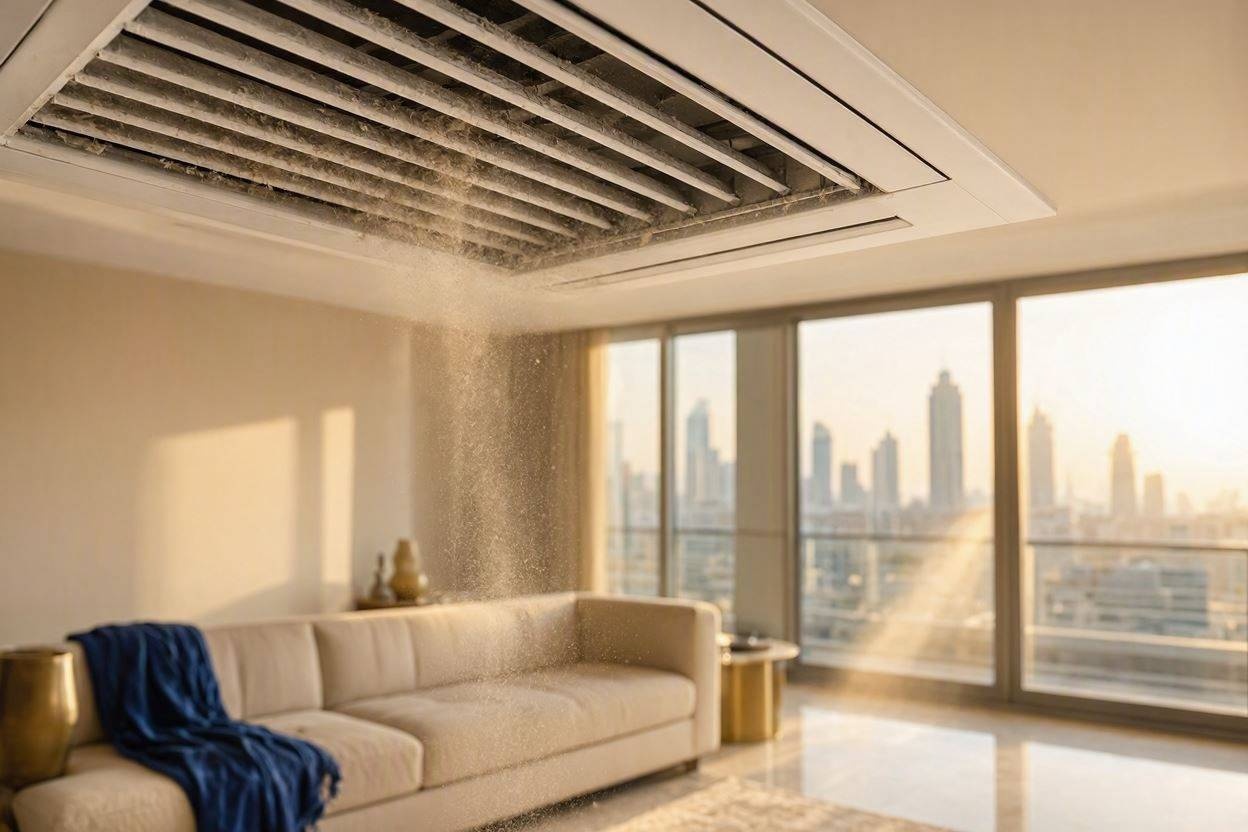
    Close up of a dirty AC Vent blowing visible dust particles.

    Sign 1: Visible Dust Coming from the Vents

    The most obvious warning is seeing dust clouds or dark particles emerging whenever the AC starts. You may notice a fine layer of dust settling on furniture, floors, and electronics shortly after the system runs. In some cases, the air feels gritty against your skin.

    This is not normal. A clean duct system should deliver air that is free of visible particles. When you see dust, the accumulation inside the ducts has reached a point where airflow alone cannot keep it contained. Continuing to run the system only spreads the problem further throughout the property.

    Homeowners in villas often notice this first in bedrooms or living areas farthest from the main unit. In offices, staff may complain about dusty desks near vents. Either way, it is time to schedule AC duct cleaning services in Dubai before the situation worsens.

    Sign 2: Musty or Unpleasant Odors When the AC Turns On

    Dust rarely travels alone. Moisture trapped in ducts allows bacteria, mold, and mildew to grow. When the fan starts, these organisms release volatile compounds that create a musty, earthy, or sour smell. Some people describe it as the scent of an old damp cloth or wet cardboard.

    In Dubai’s climate, this odor is especially common after the system has been off for a short period or during the transition from cooler nights to hot days. The smell may fade after a few minutes of operation, but the source remains. Persistent musty odors are a strong indicator that biological contaminants have taken hold inside the ductwork and require professional removal.

    Sign 3: Increased Allergy or Respiratory Symptoms Indoors

    If family members or employees start sneezing, coughing, or experiencing itchy eyes more often when inside the building, the AC system may be the culprit. Dust, mold spores, and other allergens trapped in ducts get recirculated continuously. People with asthma, sensitive sinuses, or existing allergies often notice symptoms intensify during the hottest months when the AC runs longest.

    Children and older adults are particularly vulnerable. In villas where windows stay closed for cooling efficiency, the indoor environment becomes a closed loop of recirculated contaminants. Tracking symptom patterns against AC usage can help confirm the connection. When indoor air quality declines noticeably, AC duct cleaning services Dubai should be high on the priority list.

    Sign 4: Uneven Cooling or Reduced Airflow from Certain Vents

    Dust buildup does more than dirty the air – it restricts airflow. Thick layers of debris on the inner walls of ducts act like insulation that narrows the passage. Rooms farthest from the air handler may feel warmer, while vents closer to the unit deliver stronger flow. You might also hear whistling or unusual noises as air forces its way past blockages.

    In multi-story villas common across Dubai and the surrounding emirates, this imbalance becomes obvious. Upper floors may struggle to cool properly while ground-floor rooms stay comfortable. Commercial spaces with long duct runs experience the same issue, leading to complaints from staff in certain zones. Reduced efficiency also means the system works harder, driving up electricity consumption.

    Sign 5: Higher Than Usual DEWA Bills Without Changes in Usage

    Dubai Electricity and Water Authority bills reflect how hard your cooling system works. When ducts are clogged, the blower motor and compressor must run longer and more frequently to reach the set temperature. Even if your thermostat settings and occupancy patterns remain the same, energy use climbs.

    Many homeowners only notice the jump after several billing cycles. Comparing current DEWA statements with the same period from previous years can reveal the trend. If cooling costs have risen while other factors stayed constant, dirty ducts are a likely contributor. Cleaning restores proper airflow and can return the system closer to its original efficiency levels.

    Sign 6: Visible Mold or Dark Stains Around Vents

    Sometimes the problem becomes visible on the exterior of the vents or the ceiling around them. Dark streaks, fuzzy patches, or water stains signal that moisture and organic material have combined inside the ducts. Mold can grow on the insulation lining many duct systems and then migrate outward.

    In Dubai villas with gypsum board ceilings, these stains often appear first. Attempting to wipe them away only addresses the symptom. The source remains inside the duct network and will continue to release spores until properly cleaned and, if necessary, repaired.

    Sign 7: Recent Renovation or Construction Dust Exposure

    If your home or office underwent renovation, painting, or nearby construction, large amounts of fine dust almost certainly entered the duct system. Even with protective measures, particles settle on coils, filters, and duct walls. Running the AC afterward spreads that construction dust throughout the building.

    Many Dubai residents schedule professional cleaning after major projects for this reason. Waiting months allows the debris to embed more deeply and mix with everyday household dust, making later removal more difficult.

    Why DIY Methods Rarely Solve the Problem

    Some people try vacuuming vents or using household cleaners. These approaches only reach the first few centimeters of the duct. Professional AC duct cleaning services in Dubai use specialized equipment – rotating brushes, high-powered vacuums, and sometimes compressed air or negative-pressure systems – to agitate and extract debris from the entire network.

    DIY efforts can also push contaminants deeper or damage delicate duct materials. In the UAE climate, incomplete cleaning often leads to faster re-accumulation. Certified technicians understand local duct configurations common in villas and commercial buildings and follow safety protocols that protect both the system and indoor air quality.

    The Health and Comfort Benefits of Timely Cleaning

    Removing the accumulated dust and biological material delivers immediate improvements. Air feels fresher. Allergy symptoms often decrease within days. Cooling performance becomes more consistent across rooms. Many clients report that their system reaches the desired temperature faster, reducing run time and wear on components.

    For families with young children or elderly members, the reduction in airborne irritants provides peace of mind. In offices, cleaner air contributes to better concentration and fewer sick days. These benefits make the investment in professional service worthwhile, especially before the peak summer months when AC usage intensifies.

    How Often Dubai Properties Need AC Duct Cleaning

    There is no universal schedule that fits every building. Factors include the age of the system, presence of pets, proximity to construction or desert areas, and whether occupants smoke indoors. As a general guideline, many UAE maintenance professionals recommend inspection and cleaning every 12 to 24 months for residential properties and more frequently for high-occupancy commercial spaces.

    Homes near busy roads or ongoing developments may need attention annually. Properties with well-sealed windows and high-quality filtration can sometimes extend the interval. The safest approach is to watch for the signs listed earlier and schedule service when they appear rather than waiting for a fixed calendar date.

    What to Expect During Professional AC Duct Cleaning

    A reputable provider begins with a visual inspection, sometimes using cameras to assess the interior condition of the ducts. Technicians then seal vents and create negative pressure to prevent debris from escaping into rooms. Specialized brushes and agitation tools loosen the buildup, while powerful vacuums extract it.

    After cleaning, many companies replace or clean filters and check the evaporator coil for related contamination. The entire process for a typical villa can take several hours depending on the size and complexity of the duct network. Offices often schedule the work during off-hours or weekends to minimize disruption.

    Clients should ask about the equipment used, whether the company follows industry standards, and whether they provide before-and-after documentation. Transparent providers are happy to explain their process and answer questions about local best practices.

    Choosing the Right Provider for AC Duct Cleaning Services Dubai

    Not every cleaning company offers the same level of service. Look for teams experienced with the specific duct systems found in Dubai villas and commercial buildings. Ask whether they use HEPA-filtered vacuums, whether technicians are trained, and whether they carry proper insurance.

    Reading recent client reviews that mention residential or office work in the UAE can provide useful insight. Avoid unusually low quotes that may indicate incomplete service or the use of inadequate equipment. A thorough cleaning costs more than a surface-level job but delivers lasting results.

    Preventive Steps You Can Take Between Professional Cleanings

    While professional service is essential for deep cleaning, daily habits help slow the rate of accumulation. Keep windows and doors closed during dust storms. Change or clean AC filters according to the manufacturer’s recommendations – often every one to three months in Dubai’s dusty conditions. Use doormats and remove shoes at the entrance to reduce tracked-in sand.

    If you have pets, regular grooming and vacuuming of soft furnishings limit the amount of dander entering the system. Consider upgrading to higher-efficiency filters if your system supports them, but ensure the increased resistance does not strain the blower motor. These simple measures extend the time between full duct cleanings and keep indoor air cleaner in the interim.

    The Cost of Waiting Too Long

    Delaying necessary cleaning creates compounding problems. Restricted airflow forces the system to work harder, accelerating wear on the compressor and other expensive components. Persistent allergens and mold can aggravate health conditions. In extreme cases, heavy contamination contributes to system failure during the hottest part of the year – precisely when repair services are busiest and most expensive.

    Addressing the issue at the first clear signs is almost always more economical and less stressful than waiting for a breakdown or a serious health complaint.

    Conclusion: Act on the Signs Before Summer Heat Intensifies

    When your AC starts blowing dust, the message is clear. The ducts need professional attention. The combination of Dubai’s climate, continuous cooling demand, and everyday living produces rapid buildup that simple filter changes cannot solve. Recognizing the seven signs outlined here – visible dust, odors, allergy symptoms, uneven cooling, rising DEWA bills, visible mold, and post-renovation dust – allows you to schedule ac duct cleaning services in Dubai at the right moment.

    Clean ducts deliver cooler air, lower energy use, and a healthier indoor environment for your family or workforce. Contact a trusted local provider as soon as you notice these warning signals. The sooner the system is cleaned, the sooner you regain the comfort and air quality you expect in a Dubai home or office.

    Taking action now protects both your investment in the cooling system and the well-being of everyone who spends time inside the building. Fresh, clean air is one of the simplest and most valuable improvements you can make before the next heat wave arrives.

    Professional technician using specialised equipment to clean.

    Frequently Asked Questions (FAQs)